

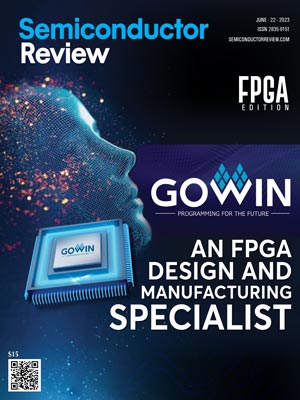
In the rapidly evolving technological landscape, one technology stands out for its versatility and potential to revolutionize various industries: Field-Programmable Gate Arrays (FPGAs). These programmable logic devices offer a flexible and customizable hardware platform that enables engineers and developers to create highly optimized solutions for a wide range of applications. As the demand for faster and more efficient computing continues to grow, it is imperative that we recognize and embrace the transformative power of FPGA technology.
FPGAs provide a unique opportunity to bridge the gap between software and hardware development. Unlike traditional Application-Specific Integrated Circuits (ASICs) that are designed for specific tasks, FPGAs are programmable, allowing for dynamic reconfiguration to adapt to evolving requirements. This adaptability grants designers the freedom to implement custom logic and algorithms, making FPGAs an ideal choice for diverse applications such as artificial intelligence, data centers, telecommunications, embedded systems, and high-performance computing.
The key advantage of FPGA lies in its ability to achieve exceptional performance and efficiency. By directly implementing algorithms in hardware, FPGAs can execute tasks in parallel, vastly outperforming traditional sequential computing architectures. This parallelism not only accelerates computation but also reduces power consumption, making FPGAs highly efficient for computationally intensive tasks. Additionally, FPGAs enable the integration of specific hardware accelerators, facilitating the execution of complex algorithms in real-time.
In an era characterized by rapid technological advancements, speed to market is a critical factor for success. FPGA technology empowers developers to quickly prototype and iterates their designs, significantly reducing the development cycle. The ability to modify and fine-tune the hardware implementation directly at the logic level allows for rapid optimization and customization. This agility enables engineers to meet market demands swiftly and maintain a competitive edge, fostering a culture of innovation.
FPGAs represent a pivotal technology that holds the key to unlocking unprecedented performance, efficiency, and versatility. As industries continue to demand faster and more efficient solutions, FPGAs provide a compelling answer. With their inherent ability to accelerate innovation, enable edge computing, and adapt to evolving requirements, FPGAs have the potential to shape the future of computing. Embracing FPGA technology is essential for organizations and developers seeking to thrive in an increasingly competitive and technology-driven world.